25 April 2015
A magnitude 7.8 earthquake struck central Nepal on 25 April 2015, with a strong aftershock on 12 May. Nearly 9,000 people died across the country. The epicentre lay in Gorkha district, an area with many Gurung and Ghale villages.
Barpak and nearby villages
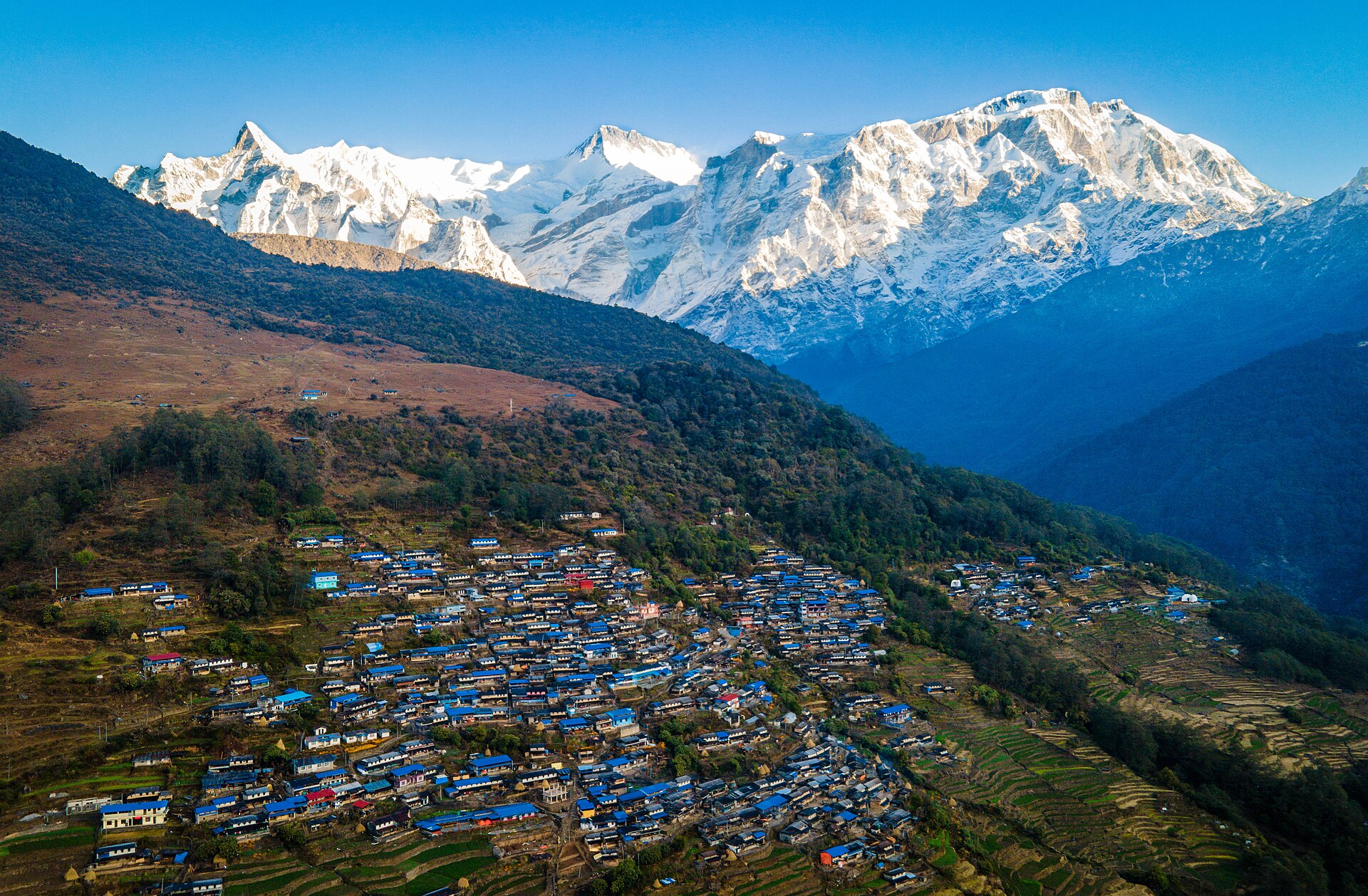
Barpak, a large Ghale-Gurung village in Gorkha close to the epicentre, saw most of its stone houses destroyed. Neighbouring villages in Gorkha and Lamjung lost homes, schools, monasteries and water systems.
The diaspora responds
Gurung communities in Britain, Hong Kong, the United States and elsewhere quickly raised money and sent help. Ex-Gurkha associations and village societies used their own networks to reach places that larger aid efforts took longer to reach.
Rebuilding
Rebuilding took years. Many families replaced old stone houses with concrete or mixed designs, changing the look of villages. Communities also worked to repair monasteries, Rodhi houses and other places of shared memory.
Sources & further reading
1Historical Processes of Power, Knowledge, and Identity Change in Gurungs
Historical interpretation · Page-level claim citations not yet suppliedNational Population and Housing Census 2021: Caste/Ethnicity, Language and Religion
Government census · Page-level claim citations not yet suppliedHeritage grows through conversation.
Know a different local account, or spotted something that needs correcting?
Share your knowledge